iPhone Screen Repair: Everything You Need to Know Before Visiting a Repair Shop
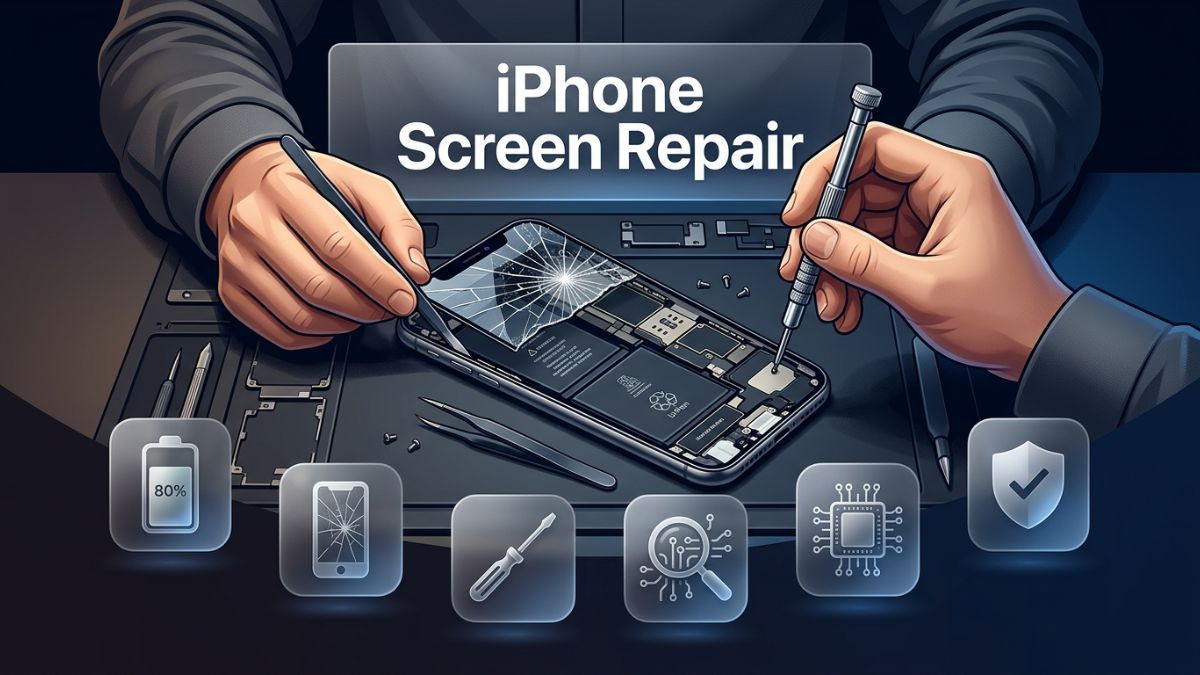
iPhone Screen Repair: Everything You Need to Know Before Visiting a Repair Shop
A cracked or damaged iPhone screen is one of the most frustrating experiences any smartphone user can face. One moment your device is perfectly fine, and the next, a single drop sends spiderweb cracks racing across the display. Whether it happened during a morning commute, a gym session, or simply slipped off a table, the result is always the same — a broken screen that disrupts your daily routine and demands immediate attention.
What makes this situation even more stressful for most people is not knowing where to turn. Should you attempt a do-it-yourself fix at home? Should you go directly to Apple? Or would a reliable local iphone screen repair shop near you offer a faster and more affordable solution? These are entirely legitimate questions, and the answers are not always straightforward.
This article is designed to walk you through everything you need to understand before taking your device anywhere for repair. You will learn about the different types of iPhone screen damage, what the repair process actually involves, how to compare your options intelligently, what questions to ask a technician, and how to avoid getting overcharged or underserved. The iPhone lineup has grown significantly over the years, and with models now ranging from the budget-friendly iPhone SE all the way to the premium iPhone 17 Pro Max and the ultra-thin iPhone Air, the complexity and cost of screen repair varies more than ever before.
By the time you finish reading, you will be fully equipped with the knowledge to make a smart, confident decision — whether that means booking a same day repair appointment today or simply understanding what to expect when you walk through the doors of a repair shop.
Understanding iPhone Screen Anatomy: What Actually Breaks
Before diving into repair costs and service options, it helps to understand what your iPhone screen is actually made of and why it is so vulnerable to damage. Most people think of the screen as a single piece of glass, but it is actually a carefully engineered, layered assembly of multiple components — each serving a specific and critical function.
The outermost layer is the protective glass, typically made from Corning Gorilla Glass or, in Apple's case, Ceramic Shield on newer models including the iPhone 14 series through the iPhone 17 lineup. Ceramic Shield is significantly tougher than standard glass and offers improved drop performance, but it is not indestructible. This is the layer most exposed to direct impact and surface scratches. When people talk about a cracked screen, they are almost always referring to damage at this outermost level. While this can look alarming, in many cases the underlying display continues to function normally even when the surface glass is heavily cracked.
Beneath the protective glass lies the display panel itself. In older iPhone models such as the iPhone 8, iPhone XR, and iPhone 11, Apple used LCD (liquid crystal display) technology. Beginning with the iPhone X and continuing through the entire iPhone 17 series, Apple transitioned to OLED and Super Retina XDR display technology. The iPhone 17 Pro and iPhone 17 Pro Max use Apple's most advanced ProMotion OLED panels with adaptive refresh rates, making them both visually stunning and considerably more expensive to replace. The iPhone Air, with its remarkably thin form factor, uses a specialized display assembly that requires unique handling during repair. Replacing any of these premium panels costs significantly more than replacing an LCD panel on an older model, which is why iphone lcd screen replacement and iphone screen replacement cost vary so dramatically depending on which generation you own.
The final critical layer is the digitizer — a transparent sensor grid embedded within the display assembly that detects your touch inputs and translates them into on-screen commands. When the digitizer is damaged, your screen may display a perfect image but fail to register taps, swipes, or gestures accurately. This is precisely what makes an iphone touch screen repair service necessary in situations where the glass appears intact but the phone is completely or partially unresponsive to touch.
Understanding this three-layer structure helps you communicate more clearly with repair technicians, ask better questions, and ensures you are not paying for a full screen assembly replacement when only one component is actually compromised.
Common Types of iPhone Screen Damage and Their Symptoms
Not all screen damage looks or behaves the same way. Recognizing the specific type of damage affecting your device helps you determine whether the issue is cosmetic or functional, and it also gives you a clearer idea of the repair scope and cost involved before you ever speak to a technician.
Surface Cracks and Shattered Glass
This is by far the most commonly reported type of iPhone screen damage. It typically results from dropping the phone on a hard surface — especially corner drops, which concentrate the full force of impact at a single point and send fracture lines spreading outward across the screen. The resulting crack can range from a single hairline fracture barely visible at one edge to a fully shattered display that obscures portions of the screen entirely.
In many cases, the display beneath the cracked glass continues to function normally. Colors look accurate, brightness is fine, and the touch screen responds correctly to input. The damage here is purely cosmetic. However, this should never be treated as something to ignore indefinitely. Cracked glass exposes the layers beneath it to moisture, dust particles, and further mechanical stress. Left unaddressed, a minor surface crack can evolve into display discoloration, touch response failure, or complete display failure over time. If you are looking to fix cracked iphone screen fast, acting early almost always saves you money.
Display Discoloration and Dark Spots
If you notice dark patches spreading from one corner, purple or yellow tints bleeding across the screen, or blotchy discoloration that was not there before, the display panel itself has likely been damaged internally. This type of damage frequently results from pressure applied to the screen — such as sitting on the phone in a pocket or placing heavy objects on top of it — rather than from a direct drop impact.
These spots indicate that the liquid crystals within an LCD panel, or the organic compounds within an OLED panel, have been physically disrupted and can no longer produce accurate pixel output. This level of damage requires a full display replacement, not simply a glass repair, and it will not improve on its own over time.
Dead Zones and Unresponsive Touch Areas
When certain regions of the screen stop responding to touch while other areas continue to function normally, the digitizer layer has been partially damaged. This can happen after a drop even when the screen looks completely undamaged from the outside. The digitizer circuit may have been disrupted by internal pressure or a hairline fracture in the connection between the digitizer and the logic board.
This symptom is frequently misdiagnosed as a software issue. If restarting your iPhone does not resolve the problem, a professional iphone touch screen repair service is almost certainly necessary. Attempting to work around dead zones by adjusting how you use the phone only delays the inevitable and risks making the damage worse.
Flickering Screens and Lines Across the Display
Vertical or horizontal lines running across the screen, combined with flickering or strobing effects, are clear signs of a damaged display cable or a failing panel. These symptoms can appear intermittently at first — the screen behaves normally most of the time but flickers briefly during certain tasks — before becoming a permanent and worsening problem.
This type of damage often indicates that the connection between the display assembly and the logic board has been compromised, either through a direct impact or through gradual wear on the flex cables that run internally through the phone's frame. Professional iphone repair technicians can identify the exact point of failure during a diagnostic assessment and determine whether a cable repair or full display replacement is required.
Completely Black Screen
A fully black screen with no display output, even though the phone appears to be powered on — indicated by sounds, vibrations, or notification alerts — can point to several potential causes. These include a severed display cable, a completely failed panel, a depleted or failed battery preventing the display from receiving adequate power, or in some cases a severe software crash.
Before concluding it is a hardware failure, attempt a force restart by following the correct button sequence for your specific iPhone model. If the screen remains black after a force restart, the issue is almost certainly hardware-related and requires hands-on diagnosis by a qualified technician at a reputable local iphone repair service.
The Full iPhone Lineup: Understanding Which Models Need What
The iPhone product lineup has expanded considerably, and the repair requirements — including parts complexity, disassembly difficulty, and replacement costs — differ significantly across generations. Knowing where your device sits in this spectrum helps you understand why quotes vary between models.
Older LCD Models (iPhone 8, iPhone XR, iPhone 11)
These models use LCD display technology, which is generally less expensive to manufacture and replace than OLED. Screen replacement on these models is more straightforward, parts are widely available, and repair costs are lower. They remain popular devices that many people continue to use, and most qualified repair shops can service them quickly.
Mid-Generation OLED Models (iPhone X through iPhone 13 Series)
Starting with the iPhone X, Apple moved to OLED display technology across its lineup. These screens produce superior image quality but are more fragile and significantly more expensive to replace. The iPhone 12 and 13 series also introduced Ceramic Shield, which improved drop resistance but did not eliminate screen damage. True Tone calibration and Face ID sensor preservation during repair became critical concerns with these models, requiring more skilled technicians.
Recent Premium Models (iPhone 14, iPhone 15, iPhone 16 Series)
The iPhone 14, 15, and 16 lineups introduced further refinements to the display assembly, including always-on display capabilities on Pro models, Dynamic Island integration, and improved ProMotion refresh rates. These features require careful component transfer during screen replacement and may require software-level calibration tools that not all repair shops possess. Choosing an experienced iphone display repair shop is especially important for these generations.
Latest Models (iPhone 17, iPhone 17 Pro, iPhone 17 Pro Max, iPhone Air)
The iPhone 17 series represents Apple's most advanced hardware to date. The iPhone 17 Pro and iPhone 17 Pro Max feature Apple's latest-generation ProMotion OLED displays with enhanced brightness and color accuracy, while the standard iPhone 17 offers an improved display experience over its predecessors at a more accessible price point.
The iPhone Air is a genuinely unique case in the repair landscape. Its ultra-thin design requires specialized disassembly tools and techniques not commonly found in every repair shop. The thinness of the chassis means internal components are packed more tightly than in any previous iPhone model, increasing the risk of collateral damage during repair if proper care and experience are not applied. Before booking any repair for an iPhone Air, always confirm that the shop has direct experience with this specific model. Not every mobile repair shop will have the tooling or technical knowledge required to service it safely.
All iPhone 17 models use premium OLED panels with proprietary calibration requirements, and replacement parts for these models are still establishing stable supply chains, which contributes to higher repair costs compared to earlier generations.
iPhone Screen Repair Cost Breakdown by Model
Understanding the iphone screen repair cost comparison across different models helps you budget appropriately and recognize when a quote seems either unreasonably high or suspiciously low. The figures below represent general market estimates and should be used as a reference point when requesting an iphone screen repair quote online or by phone.
| iPhone Model | Apple Repair (No AppleCare+) | Local Repair Shop (Quality Parts) | Budget Third-Party Parts |
|---|---|---|---|
| iPhone SE (2nd / 3rd Gen) | $129 | $60 – $90 | $40 – $60 |
| iPhone 8 / 8 Plus | $149 – $169 | $65 – $95 | $45 – $65 |
| iPhone XR | $199 | $85 – $120 | $60 – $80 |
| iPhone 11 | $199 | $90 – $130 | $65 – $85 |
| iPhone 11 Pro / Pro Max | $249 – $299 | $120 – $170 | $85 – $115 |
| iPhone 12 / 12 Mini | $229 – $249 | $110 – $155 | $75 – $105 |
| iPhone 12 Pro / Pro Max | $279 – $329 | $140 – $185 | $95 – $130 |
| iPhone 13 / 13 Mini | $279 – $299 | $130 – $175 | $90 – $125 |
| iPhone 13 Pro / Pro Max | $329 – $379 | $160 – $210 | $110 – $150 |
| iPhone 14 / 14 Plus | $299 – $349 | $150 – $200 | $105 – $145 |
| iPhone 14 Pro / Pro Max | $379 – $429 | $190 – $245 | $135 – $175 |
| iPhone 15 / 15 Plus | $329 – $379 | $170 – $225 | $120 – $160 |
| iPhone 15 Pro / Pro Max | $399 – $449 | $210 – $270 | $150 – $195 |
| iPhone 16 / 16 Plus | $349 – $399 | $185 – $240 | $130 – $175 |
| iPhone 16 Pro / Pro Max | $419 – $469 | $225 – $290 | $160 – $210 |
| iPhone 17 / iPhone Air | $379 – $449 | $210 – $295 | $150 – $205 |
| iPhone 17 Pro / Pro Max | $449 – $529 | $260 – $350 | $185 – $245 |
It is important to note that prices for iPhone 17 series parts — including the iPhone Air — are subject to more variability than older models, as the supply chain for these components is still maturing. Repair shops sourcing premium quality parts for the iPhone 17 Pro Max in particular may quote at the higher end of the local shop range. Always confirm whether the quote you receive includes labor, warranty coverage, and any additional components that may need replacement during the repair process.
How to Find a Reliable iPhone Repair Shop Near You
Searching for the best iphone repair service near me can return dozens of results across map listings, directories, and social media platforms. Not all of them are equally trustworthy, and the quality of repair work can vary significantly even between shops that appear similar on the surface. Knowing what to look for gives you a genuine advantage when choosing where to take your device.
Check for Reviews and Ratings
Customer reviews on platforms such as Google, Yelp, and Facebook provide honest, real-world feedback about a shop's quality of work, turnaround speed, customer service, and pricing transparency. When reading reviews, look specifically for comments that mention screen repair on your iPhone model. A shop that has extensive positive reviews for newer model repairs is more likely to have the parts inventory and technical knowledge necessary to handle current-generation devices. A high overall rating across a large number of reviews is a consistently reliable indicator of trustworthy service.
Ask About Parts Quality Directly
When contacting a mobile repair shop for iphone screen service, ask directly whether they use OEM-equivalent parts, premium aftermarket parts, or standard budget components. OEM-equivalent parts are manufactured to Apple's original specifications through authorized supply channels and typically produce display quality that is virtually indistinguishable from the factory original. Premium aftermarket parts offer a strong middle ground — excellent quality at a lower price point than OEM. Budget parts may function adequately but often result in noticeably reduced brightness, less accurate color reproduction, or unreliable touch sensitivity that worsens over time.
Confirm Warranty Coverage in Writing
Any professional repair shop worth visiting should offer a warranty on their work, and that warranty should be documented in writing before the repair begins. A standard iphone screen repair with warranty covers defects in the replacement part and any installation-related workmanship issues for a minimum of 30 to 90 days. Many reputable shops extend this to six months or even a full year on quality parts. A shop that refuses to offer any written warranty should be treated with serious caution, regardless of how competitive their pricing may be.
Verify Turnaround Time and Same-Day Availability
If you depend heavily on your phone for work, communication, or daily navigation, turnaround time is a critical factor. Confirming whether a shop offers same day iphone screen repair before you commit to visiting saves you significant inconvenience. Most professional shops can complete a straightforward screen replacement in 30 to 60 minutes. Repairs involving the iPhone Air or iPhone 17 Pro Max may take slightly longer due to their complexity, but same-day completion is still achievable at well-equipped shops.
Assess Technician Experience with Current Models
Not every technician who can comfortably repair an iPhone 11 is equally prepared to service an iPhone 17 Pro or iPhone Air. These newer models require specific disassembly techniques, dedicated tooling, and familiarity with Apple's latest component configurations. When evaluating professional iphone repair technicians, ask specifically whether they have hands-on experience with your model. A confident, knowledgeable technician will answer this question directly and may even describe the specific steps involved in your repair.
DIY vs Professional iPhone Screen Repair: A Detailed Comparison
| Factor | DIY Repair | Professional Repair |
|---|---|---|
| Upfront Cost | Lower ($30 – $100 for kits) | Higher but all-inclusive |
| Risk of Additional Damage | High — especially on newer models | Low — handled by trained technicians |
| Time Required | 1 – 4+ hours for first-timers | 30 – 90 minutes typically |
| Parts Quality | Highly variable based on source | OEM or quality aftermarket available |
| Warranty on Repair | None | 30 days to 12 months |
| Specialized Tools Required | Yes — often not included in kits | Provided and maintained by shop |
| True Tone Preservation | Extremely difficult without Apple software | Maintained by experienced technicians |
| Face ID / Biometrics Safety | High risk of permanent damage | Preserved with proper technique |
| iPhone Air / iPhone 17 Pro Suitability | Not recommended | Strongly recommended |
| Overall Recommendation | Experienced users, older models only | All models, all damage types |
The case for professional repair grows stronger with each new iPhone generation. Older models like the iPhone 8 or iPhone XR are more forgiving of DIY attempts because their internal layouts are simpler and replacement parts are widely available. However, attempting a self-repair on an iPhone 17 Pro Max or iPhone Air without the correct tools and training risks permanently damaging Face ID, the ProMotion display calibration, or delicate internal components packed tightly within the ultra-thin chassis. The cost of fixing a botched DIY repair often exceeds what a professional repair would have cost from the start.
What to Expect During a Professional iPhone Screen Repair
Walking into a repair shop without knowing what the process involves can feel uncertain, especially when handing over a device that contains your personal data, photos, and communications. Understanding each stage of the repair process helps set realistic expectations and gives you the confidence to ask the right questions at every step.
Initial Diagnostic Assessment
A professional technician will thoroughly examine your device before beginning any repair work. This involves a visual inspection of the screen damage, testing touch response across the entire display surface, evaluating display output quality, and checking whether associated components — such as the front camera, Face ID sensor array, proximity sensor, or earpiece speaker — have also been affected by the impact. This diagnostic step is critical. It determines precisely what needs to be replaced and prevents unexpected complications from surfacing mid-repair, which can delay turnaround and increase costs.
Transparent Cost Estimate
Following the diagnostic, the technician should provide a clear and itemized cost estimate. This is the moment to ask every question you have — about parts quality, warranty terms, turnaround time, and whether any additional components may need replacement. A trustworthy shop will answer these questions openly and will never begin work beyond the agreed scope without your explicit approval and a revised estimate.
Safe Device Disassembly
The actual repair begins with the technician powering off your device and carefully opening the phone using specialized precision tools. iPhones are not designed for easy disassembly. They use proprietary pentalobe screws along the bottom edge and strong perimeter adhesive that seals the display assembly to the frame. Experienced technicians use calibrated heat sources and suction tools to soften the adhesive and carefully separate the display from the chassis without applying excessive force to the fragile internal flex cables.
On the iPhone Air specifically, the ultra-thin chassis requires exceptionally controlled pressure during disassembly. The internal clearances are tighter than any previous iPhone model, meaning that standard prying techniques used on older models cannot be applied. Shops with experience repairing iPhone Air units will have adapted their approach accordingly.
Component Transfer
Depending on the repair scope and the specific iPhone model, the technician may need to carefully transfer components from the damaged screen assembly to the new replacement screen. These transferable components typically include the earpiece speaker, the ambient light sensor, the front-facing camera module, and critically, the Face ID dot projector and infrared camera array. Mishandling any of these components — particularly the Face ID hardware — can permanently disable facial recognition, a failure that cannot be corrected by software and requires a return visit to Apple for resolution. This precision-critical step is one of the strongest arguments for choosing professional iphone repair technicians over DIY approaches.
Screen Installation and Calibration
Once the new display is correctly seated and all transferred components are secured, the technician will reconnect the display flex cables to the logic board and carefully close the device. On models requiring it, software calibration is performed to integrate the new display with the device's True Tone ambient light adjustment system. Without this calibration, the screen may display colors that appear slightly warm or cool compared to factory settings, and the True Tone feature may be disabled entirely.
Final Functional Testing
Before returning the phone to you, a thorough final test should cover every relevant function — display brightness and color accuracy, touch response across all zones of the screen, proximity sensor behavior during calls, Face ID recognition performance, front camera functionality, and the physical integrity of the device seal. A reputable shop will invite you to witness and participate in this final check before you leave, ensuring complete transparency about the outcome of the repair.
Repair Services Beyond iPhone Screens
While this article centers on iphone screen repair, it is genuinely useful to know that professional repair shops typically handle a comprehensive range of device issues beyond just screens. Understanding the full scope of services available helps you address multiple problems in a single visit rather than making separate trips to different providers.
For Android users, professional Samsung repair services address the full range of issues affecting Galaxy devices — from cracked AMOLED displays on the Galaxy S and Z series to battery degradation, water damage, and charging port failures. Samsung's foldable devices, such as the Galaxy Z Fold and Z Flip series, require particularly specialized repair expertise given their unique hinge mechanisms and flexible display assemblies.
Users dealing with malfunctioning computers can benefit from professional laptop repair services covering cracked screens, failing keyboards, battery replacement, overheating issues, and storage upgrades. Whether it is a MacBook, a Dell, an HP, or a Lenovo, experienced technicians can diagnose both hardware and software-level problems efficiently.
For gaming enthusiasts, professional gaming console repair covers everything from HDMI port replacements and disc drive failures to overheating issues, controller malfunctions, and software recovery. PlayStation, Xbox, and Nintendo Switch systems all have common failure points that a skilled technician can resolve without requiring a full console replacement.
Battery degradation is one of the most frequently overlooked reasons for reduced iPhone performance. If your device drains unusually fast, shuts down unexpectedly at moderate charge levels, or struggles to hold a charge overnight, a professional battery replacement service can restore your device's stamina and performance without requiring a costly upgrade to a newer model.
Charging issues are another common complaint that often has a straightforward solution. Debris accumulation in the Lightning or USB-C port, a damaged charging cable, a failed charging IC on the logic board, or a bent port connector can all prevent your device from charging reliably. A qualified technician can diagnose the root cause quickly and perform the appropriate repair, whether that is a port cleaning, a port replacement, or a deeper logic board-level fix.
iPhone Screen Repair: Warning Signs of a Low-Quality Repair Shop
Not every shop advertising cheap iphone screen repair near me delivers the quality and reliability that the price suggests. Some shops use inferior parts, skip calibration steps, or employ technicians with insufficient experience on current iPhone models. Knowing the warning signs protects your device and your investment.
Prices significantly below market average without explanation: If a shop quotes a price that is dramatically lower than every other option you have received, ask specifically why. Extremely low pricing almost always indicates the use of low-grade copy screens that deliver poor color accuracy, inadequate brightness, inconsistent touch response, or that fail entirely within weeks of installation.
No written warranty offered: Any reputable local iphone repair service stands behind their work with a documented warranty. A shop that declines to provide warranty terms in writing is giving you a clear signal about their confidence in the quality of their parts and workmanship.
Vague or evasive diagnostic communication: Professional iphone repair technicians can explain clearly and in plain language what is wrong with your device, what the repair involves, and why a specific part needs to be replaced. Technicians who are vague, dismissive of your questions, or unable to describe the repair process should not be trusted with your device.
Aggressive upselling without evidence: Some shops use screen repair as a gateway to recommend a long list of additional services that may not actually be necessary. While legitimate follow-up recommendations are appropriate in some cases, pressure-based upselling without clear diagnostic evidence is a red flag worth taking seriously.
No verifiable physical address or online presence: A legitimate iphone repair shop near me should have a confirmed physical address, a Google Business profile with customer reviews, and some form of online presence. Shops with no traceable identity or verifiable history of service should be avoided regardless of how attractive their pricing may appear.
Walk-In vs Appointment-Based Repair: Which Is Right for You
| Repair Format | Key Advantages | Considerations |
|---|---|---|
| Walk-In Service | No scheduling required, immediate attention | Possible wait during peak hours |
| Online Appointment Booking | Guaranteed time slot, faster intake process | Requires advance planning |
| Same-Day Booking | Fast turnaround with minimal waiting | Depends on shop availability |
| Mail-In Repair | Convenient for remote or rural locations | 5 – 10 day turnaround, no direct contact |
| On-Site Business Repair | Ideal for organizations with multiple devices | May require a service agreement |
For urgent situations — needing your phone repaired before a critical meeting, a travel departure, or an important event — walk in iphone screen repair at a local shop offering iphone screen repair open now is your most practical option. Many professional shops now also support iphone screen repair booking online, allowing you to describe your issue in advance, receive a preliminary quote, and reserve a specific time slot before arriving. This combination of speed and convenience is one of the key reasons local repair businesses continue to grow in relevance.
Cost-Saving Strategies for iPhone Screen Repair
Getting your iPhone screen repaired does not have to be an overwhelming expense. Several practical strategies help you access affordable iphone screen replacement without compromising on quality, warranty, or long-term reliability.
Collect multiple quotes before committing: Contact at least two or three local shops and request an iphone screen repair price estimate for your specific model. This gives you a realistic baseline for fair market pricing in your area and helps you immediately identify outliers — both overpriced and dangerously underpriced options.
Look for current promotional offers: Many shops run iphone screen repair deals near me through seasonal promotions, referral discounts, first-time customer offers, or bundled service packages. Following a shop's social media accounts or subscribing to their email updates can give you early access to these savings opportunities.
Check your AppleCare+ or insurance status: If your iPhone is still covered under AppleCare+, screen repair costs are significantly reduced through Apple's own repair program. Some third-party smartphone insurance policies also cover accidental screen damage, meaning a portion or all of your repair cost may be reimbursable. Always check your coverage status before paying full price out of pocket.
Understand the part quality tiers: Many repair shops offer tiered pricing based on part quality — OEM-equivalent, premium aftermarket, and standard aftermarket. Understanding the genuine difference in quality between these tiers lets you make a cost-conscious decision based on your specific situation, your device's age, and how long you plan to keep using it.
Factor in device age and condition: For older iPhone models with existing performance issues, spending a significant amount on a premium screen replacement may not represent the best use of your budget. A broken iphone screen fix near me for an iPhone 11 or earlier model should be weighed against the realistic remaining lifespan of the device and whether other components — battery, speakers, or camera — are also showing signs of wear.
Protecting Your iPhone Screen After Repair
Once your device has been professionally repaired, adopting a few simple protective habits can dramatically extend the life of your new screen and reduce the likelihood of returning to a repair shop sooner than necessary.
Apply a tempered glass screen protector immediately: A high-quality tempered glass protector adds a sacrificial layer of protection that absorbs the brunt of surface impacts and prevents direct scratching of the replacement screen. These are inexpensive, widely available, and represent one of the best post-repair investments you can make. Many repair shops will apply one during your visit for a small additional fee.
Use a case with proper edge and corner protection: A quality protective case with raised edges that extend slightly above the screen surface prevents the display from making direct contact with flat surfaces during drops. Cases with reinforced corner cushioning are particularly effective at absorbing and distributing impact energy away from the most vulnerable points of the phone.
Avoid exposing your device to extreme temperatures: Prolonged heat — such as leaving your phone on a car dashboard in direct sunlight — can weaken the adhesive layers within the screen assembly and accelerate display degradation over time. Extreme cold can cause similar issues with display responsiveness and battery performance. Moderate, consistent environmental conditions extend the life of both the screen and the battery.
Be mindful in high-risk situations: Most accidental drops occur when people are distracted, rushing, or handling their phone with one hand in precarious situations. Simple behavioral awareness — using both hands in risky situations, keeping the phone secured in a pocket rather than loosely carried, and using a wrist strap when appropriate — can meaningfully reduce drop frequency.
Understanding Your Warranty After an iPhone Screen Repair
When you invest in iphone screen repair with warranty coverage, fully understanding what that warranty does and does not protect against is essential to making the most of it. A repair warranty should cover manufacturing defects in the replacement screen and any workmanship-related failures that arise after installation. If the new screen develops dead pixels, discoloration, or touch response problems within the warranty period without any new physical damage, the repair shop should address these issues at no additional cost.
However, a standard repair warranty does not cover new physical damage caused by a subsequent drop or impact. If the repaired screen cracks again in a new incident, that is not covered under warranty terms and would require a new repair. Similarly, water damage that occurs after the repair may not be covered unless the shop specifically guarantees a water-resistant seal as part of their service.
Some shops offer extended warranty packages for an additional fee, which can be a worthwhile consideration for high-value models such as the iPhone 17 Pro Max or iPhone Air, where replacement parts are expensive and supply chains are less mature. Always read warranty terms carefully, ask directly about what is and is not covered, and request documentation before you leave the shop.
The Value of Supporting Local iPhone Repair Businesses
Choosing a local iphone repair service over a large corporate chain or a distant mail-in provider offers advantages that extend well beyond simply getting your screen fixed. Local repair businesses contribute directly to community employment, support the broader local economy, and actively reduce electronic waste by extending the functional life of devices that might otherwise end up discarded.
From a practical consumer perspective, iphone screen repair small business shops frequently offer more competitive pricing, faster turnaround, and more flexible service arrangements than manufacturer-authorized programs. They also tend to adapt quickly to new iPhone releases, sourcing replacement parts for the latest models — including the iPhone 17 series and iPhone Air — and developing repair procedures as new devices become available in the market.
For organizations managing multiple employee devices, iphone repair services for small businesses provide volume pricing structures, priority service arrangements, and in some cases on-site repair options that streamline device management without disrupting daily operations. Many local shops actively offer these corporate-friendly services and are open to establishing ongoing service agreements for recurring repair needs.
Call to Action: Get Your iPhone Screen Repaired by Professionals Today
A cracked or damaged iPhone screen should never slow you down any longer than absolutely necessary. At DC Phone Repair, we deliver fast, reliable, and affordable screen repair services using quality parts — getting your device looking and performing like new, often on the same day you walk through our door.
Our professional iphone repair technicians have hands-on experience with the full range of iPhone models, from older generations through the latest iPhone 17, iPhone 17 Pro Max, and iPhone Air. Every repair is backed by a solid warranty, and we maintain full transparency throughout the entire process — no hidden fees, no unnecessary upsells, and no surprises when you come to collect your device.
Whether you are dealing with a shattered screen, a failed display, unresponsive touch zones, battery degradation, charging issues, or any other device problem — we are fully equipped to handle it with precision, care, and the professionalism your device deserves.
Do not wait for the damage to worsen or the repair costs to climb higher. Visit us today, call for a quick quote, or book your appointment online in minutes. Walk-ins are always welcome, and same-day service is available for most iPhone screen repairs.
DC Phone Repair
2704 Marion Barry Ave SE,
Washington DC 20020, United States
(202) 478-4799
https://dcphonerepair.com/
Frequently Asked Questions (FAQs)
Q1: How much does iphone screen repair typically cost for the latest iPhone models?
Screen repair costs for the iPhone 17 series and iPhone Air are generally higher than older models due to the advanced display technology and tighter internal design involved. Local repair shops typically quote between $210 and $350 for quality parts on iPhone 17 Pro and Pro Max models, while the iPhone Air falls in a similar range due to its specialized assembly. Always request an iphone screen repair price estimate specific to your model before committing to any service.
Q2: Is same day iphone screen repair available for newer models like the iPhone 17 and iPhone Air?
Same day iphone screen repair is available at most professional local repair shops for straightforward screen damage on current models, though the iPhone Air and iPhone 17 Pro Max may take slightly longer due to their complexity. Most repairs are completed within one to two hours. Confirming availability when you book — either by calling ahead or using iphone screen repair booking online — ensures the shop has the correct parts in stock for your specific model before your visit.
Q3: Will getting my iPhone repaired at a local shop affect my Apple warranty?
Having your iPhone repaired by a third-party shop may affect the Apple warranty specifically on the repaired component, but it does not void the warranty on unrelated hardware throughout the rest of the device. If your phone is covered by AppleCare+, it is worth comparing Apple's repair pricing against a reputable local iphone repair service before deciding, as AppleCare+ significantly reduces the cost of screen repair through Apple's own program.
Q4: How do I know whether I need a full screen replacement or just a glass repair?
If your display shows symptoms such as discoloration, dark spreading spots, flickering, or lines running across the screen, a full display replacement is almost certainly necessary. If the damage is purely surface-level cracking with no issues affecting display quality or touch response, a glass-only repair may suffice. A qualified technician at any reputable iphone display repair shop can perform a diagnostic assessment and recommend the most cost-effective solution for your specific situation.
Q5: Is the iPhone Air harder to repair than other iPhone models?
Yes, the iPhone Air presents unique repair challenges due to its ultra-thin chassis and tightly packed internal components. Standard disassembly techniques used on previous models cannot be applied directly, and the risk of collateral component damage is higher without proper tooling and experience. Always confirm that the repair shop you choose has direct, hands-on experience with iPhone Air repairs before leaving your device with them, and ensure they offer a written warranty covering the work performed.
Q6: What should I do to prepare my iPhone before bringing it in for screen repair?
Before visiting any cracked iphone screen repair service, back up your device using iCloud or by connecting to a computer and using Finder or iTunes. Disable the Find My feature through your Apple ID settings, as some technicians may need to power the device on and off during the repair process. You do not need to share your device passcode with the technician for a standard screen replacement, but having your data securely backed up ensures nothing is at risk regardless of what the repair process involves.
Frequently Asked Question
Welcome to our FAQ section! Here, we've compiled a list of commonly asked questions to provide you with quick answers and assistance. If you don't find the answer you're looking for, feel free to contact us directly, and we'll be happy to help.
How long does your repair service take?
At DC Phone Repair, we are able to fix most phones within 10-15min. Walk-in Welcome, We carry all parts including phone screens, charger port, iPhone batteries, android batteries, ear speakers, black glass, loud speakers, Samsung pens and many more. We can fix your cracked screen or broken phone screen within minutes.
Can DC phone repair fix water damaged phones?
We can fix any phones, if you dropped your phone in the water no worries, DC phone repair can repair you phone. our experiences techs can run diagnostics on your device and tell you exactly what is the issue and fix it quick. Our diagnostic is completely FREE!
DO I NEED AN APPOINTMENT OR CAN I WALK-IN?
We welcome all customers including Walk-ins and appointments. Most repair times are less than 10-15mins so you don't have to leave your device with us most of the time. We Love our customers at DC Phone Repair and we strive to serve our customers in the best we can.
WHAT KIND OF PHONE REPAIR SCREEN OPTIONS DO YOU PROVIDE?
At DC Phone Repair, We carry all different types of screens, including OLED replacement Screens, LCD screens, OEM apple screens, OEM Samsung screens, call us today so we can fix your phone right!
-
00
+Glorious Years
-
00
k+Happy Customer
-
00
k+Service Complete
-
00
%Satisfactions